

Article Detail
22 Sep
Before You Practice or Compete
As with any athlete, gymnasts benefit from advance planning. Here are some things you should do:
- Stay in good shape. Eating a healthy diet and staying in good physical shape — whether you're competing or not — is particularly important for gymnasts. Almost all gymnastic maneuvers require strong muscles and excellent coordination, both of which are enhanced when you keep yourself fit. Staying in shape also will make you less susceptible to injuries.
- Get a good night's sleep before a practice or competition.You'll be more at risk of injury if you try to perform a routine when you're tired.
- Warm up. Before you take the floor or get on any piece of gymnastics equipment, do jumping jacks or jog in place for a few minutes to get the blood flowing. Then gently stretch your muscles and joints. Dynamic stretching, where you make slow, controlled movements to improve range of motion, is thought to be more effective than static stretching before a workout.
- Know your own skill level. When you are first learning an event, start with simple maneuvers and learn them well before you move on to something more difficult. Trying to attempt something beyond your abilities is a good way to get hurt. Never attempt a maneuver in competition that you haven't practiced before.
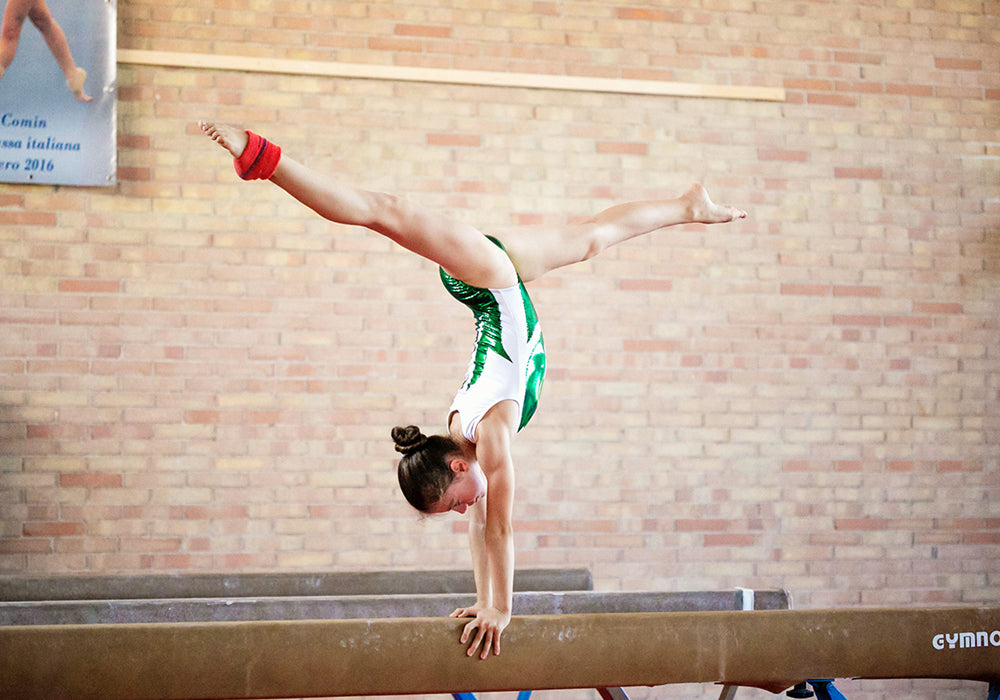
- Progress on each piece of equipment incrementally. For instance, when attempting to learn the balance beam, start with a line on the floor and then a beam on the floor before moving up to a raised beam.
While Competing or Practicing
When practicing a routine or trick that is difficult or dangerous, have a coach spot you and ready to catch you in the event of a fall. This will greatly reduce your chances of getting injured and help you maximize the benefit you get from practicing.
If you don't feel comfortable doing a maneuver, let your coach know. Gymnastics is supposed to be fun. Doing a routine that you're not comfortable with will make you less confident and more likely to get hurt.
Know and follow all the rules governing your event, and always know where you are during practice and competitions. It may seem silly to say, but you want to make sure you never wander into an area where you may be in danger of colliding with a gymnast doing a routine.
If you notice any pain or discomfort while performing a routine, let your coach know right away. Don't do any more gymnastics until the pain goes away or you've had the injury looked at by a doctor and been cleared to start practicing again. "Playing through the pain," as they say, will only make injuries more severe. That can keep you sidelined even longer.
If your school or gym club has a trampoline, don't go on or under it when someone else is using it. Keep the tarp surface clear of items like shoes and clothes. If you are on the trampoline, make sure the area around it is well padded, and always aim for the center of the trampoline when you land.
Eating Disorders
OK, so bulimia, anorexia, or other eating disorders aren't actually "injuries" — but they can lead to them. Poor nutrition, not getting enough calories, and purging habits (like throwing up) can weaken gymnasts and affect performance. Eating disorders can also cause serious health problems that aren't limited to injury.
There's a lot of pressure on a young gymnast to keep a trim physique, and that can lead to unhealthy eating. If you think a friend or teammate might have an eating disorder, don't be afraid to tell a coach or parent. The best way to fight eating disorders is to catch them early.
Teen gymnasts are at a point in their lives when it is most essential to eat healthy foods to support growth and performance. Eating disorders will lead to very serious health problems down the road.
As with any sport, keeping things in perspective is key to your enjoyment — and safety. Gymnastic events can be dangerous if you're giving anything less than 100% of your attention and effort. If you're not enjoying yourself, or if you feel like you're under too much pressure, take a step back. Try to remember why you got into gymnastics in the first place. It's a great sport, and nothing beats the thrill and satisfaction of a well-executed routine. So aim to have fun and take pride in what you do!